
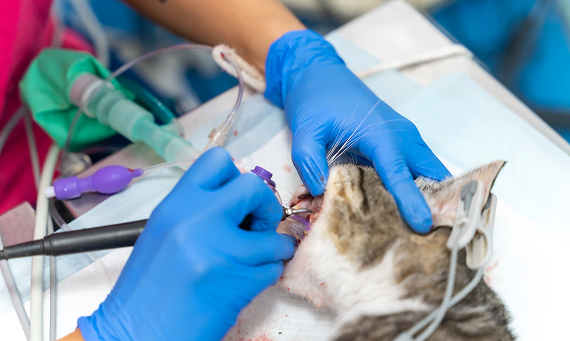
Dental disease is one of the most common health conditions in cats—and one of the easiest to miss.
Cats are exceptionally good at hiding discomfort. In many cases, dental disease progresses quietly until it becomes painful and advanced.
That’s why early detection is critical.
Catching dental issues early allows for simpler treatment, better outcomes, and a significantly improved quality of life for your cat.
⸻
Early Warning Signs to Watch For
Dental disease in cats can be subtle. Some of the most common early signs include:
- Bad breath
- Red, swollen, or sensitive gums
- Yellow or brown buildup along the gum line
- Drooling or excessive salivation
- Difficulty eating or dropping food
- Preferring soft food or avoiding dry food
- Pawing at the mouth or face
- Changes in behavior or decreased activity
Even small changes can be meaningful. Cats rarely show obvious signs of pain until the disease is more advanced.
⸻
Why Dental Disease Shouldn’t Be Ignored
Dental disease doesn’t just affect the mouth.
As bacteria build up below the gum line, infection can develop and spread. Over time, this can lead to:
- Pain and inflammation
- Tooth loss
- Oral infections
- Difficulty eating
- Decreased overall health
In some cases, bacteria can enter the bloodstream and impact major organs, including the heart and kidneys.
The longer dental disease goes untreated, the more complex and invasive treatment becomes.
⸻
When to Involve Your Veterinarian
If you notice any signs of dental disease, your veterinarian should be your first point of contact.
A proper evaluation allows your veterinarian to:
- Determine the stage of dental disease
- Identify underlying conditions
- Recommend the most appropriate treatment plan
Depending on your cat’s needs, care may include:
- Anesthetic dental treatment for advanced disease
- Preventive or maintenance care for early-stage disease
- A combination of professional care and at-home support
Early intervention often means less invasive treatment and better long-term outcomes.
⸻
Preventive Care Is Key
Routine dental care plays a critical role in maintaining your cat’s oral health.
This includes:
- Regular veterinary checkups
- Professional cleanings when recommended
- Consistent home dental care
Because cats are less likely to show symptoms, regular evaluations are especially important.
⸻
Bottom Line for Pet Owners
Dental disease in cats often develops silently—but its impact can be significant.
Recognizing early signs and involving your veterinarian early can help prevent pain, reduce the need for more advanced treatment, and support your cat’s long-term health.